Art Marketing: What's the best social media platform for artists?
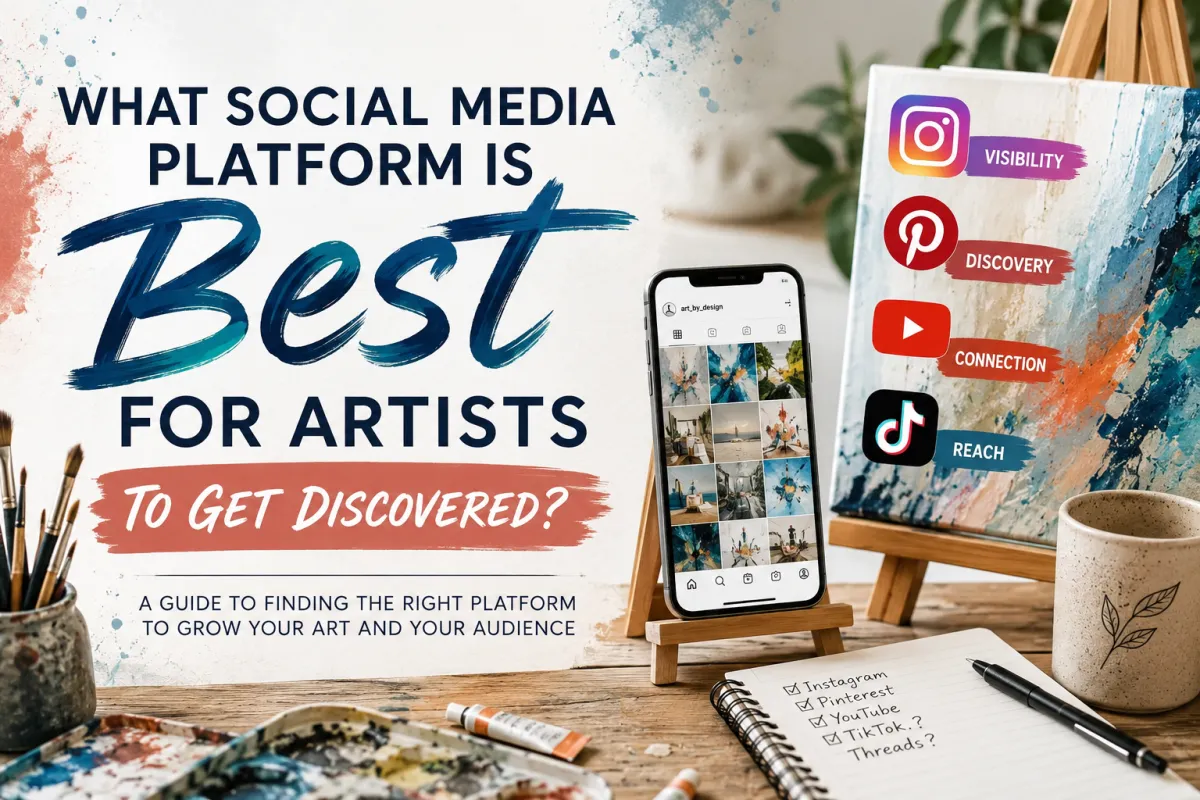
What Social Media Platform Is Best for Artists to Get Discovered?
Instagram is still your best bet in 2026, with Pinterest right behind it if you want people actually clicking through to buy your work. YouTube is picking up too, especially for artists who like being on camera and sharing their process in real depth.
The honest answer: it depends on what you make, how you like to work, and where the people who actually buy your stuff are already hanging out.
Why Instagram Still Wins for Artist Discovery
Instagram was basically built for visual work. That's the whole point.
Artists who actually gain traction on Instagram in 2026 nail three things: posting solid images of finished work, dropping Reels that show how you make it, and showing up regularly. The algorithm listens when people engage. Save your post, share it, comment something real — Instagram notices and shows it to more people.
The real advantage: your actual buyers are there. Collectors, interior designers, galleries, people with money looking for new artists. You're meeting them where they're already scrolling.
The real problem: organic reach has tanked. Late 2025 was brutal. Post something and maybe 5-15% of your followers see it unless it blows up. That means slower growth than three years ago, which means you have to post way more often just to stay visible.
How to Actually Win on Instagram Right Now
Reels kill static photos. A 15-second video of you painting, sculpting, or building something gets 3-5x more reach than a polished finished-work photo. People watch, they engage, the algorithm notices.
Carousels (multiple images per post) outperform single shots. Different angles of the same piece. Your studio. Progress shots. People swipe through, and every swipe tells Instagram "this is interesting."
Post Stories every day. No filter required. Show your workspace, your work in progress, whatever. Stories don't need to be perfect. They just need to be real.
Use all 30 hashtags. Mix broad tags (#artistsoninstagram, #contemporaryart) with specific ones (#texaslandscapepainting, #ceramicfunctionalart). The broad ones get you volume. The niche ones get you in front of people actually looking for what you do.
Tag your location. Galleries and collectors search by geography. If you're in Austin, tag it. Showing work in a gallery? Tag the gallery.
Pinterest Isn't Really Social Media
It's a search engine that happens to be visual.
People use it to find, save, and shop. Someone searches "abstract art for living room" and your Pin shows up, they click through to your site. That's the whole game.
The win: your Pins stick around. Create one today and it drives traffic six months from now. Instagram posts are dead in 24 hours. Pinterest compounds.
The catch: you need somewhere to send people. A website, a shop, a landing page where people can actually buy or at least sign up. Pinterest without a destination is just pretty pictures.
How to Actually Win on Pinterest Right Now
Vertical images work best (2:3 ratio, 1000x1500 pixels). Create Pins specifically for Pinterest, not recycled Instagram posts.
Write titles and descriptions for search. "Blue abstract painting for modern living rooms" beats "Untitled No. 47." Think like someone Googling what you make.
Pin 5-10 times a day, scheduled out in advance. Use Tailwind or Later (free tiers work fine) to batch this. Consistency keeps your profile active.
Every Pin needs a link. Product page, portfolio, blog post — somewhere people can see the work and take action.
Build boards that match what buyers actually want. "Living Room Art Ideas," "Kitchen Decor," "Handmade Gifts for Her." These attract people ready to buy, not just scrolling around.
YouTube Builds Real, Lasting Connections
YouTube moves slower than Instagram or Pinterest. Requires more effort. But it pays off in a way neither of the other two do.
People subscribe to YouTube when they actually want more of you. Your process, your story, your personality. A 10-minute video where you walk through why you made something, what colors you chose, what inspired it — that builds something a 15-second Reel can't touch.
The advantage: these audiences stick. They come back. They watch multiple videos. They feel like they know you. New collection drops? They're buying.
The friction: it's a lot of work. Filming, editing, uploading, optimizing. If you hate being on camera or you don't enjoy teaching, this will feel like a drag.
How to Actually Win on YouTube Right Now
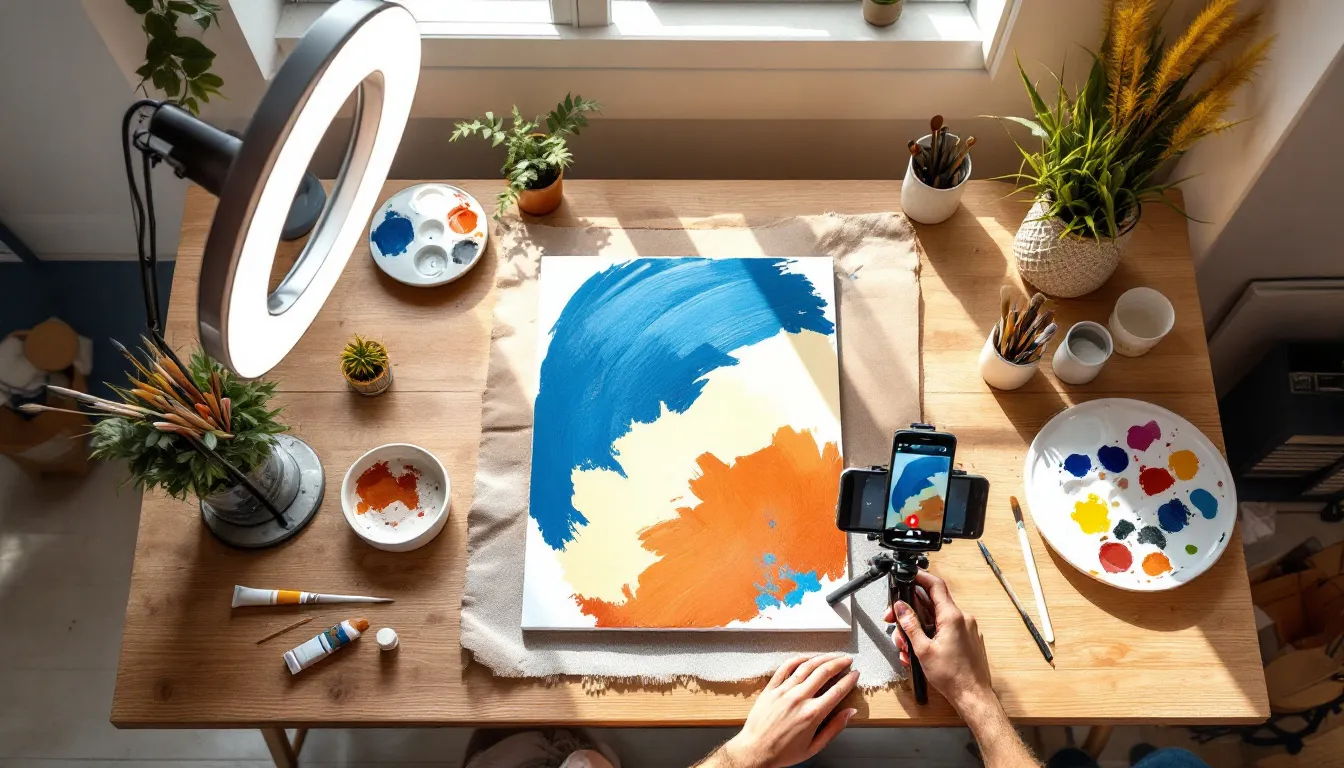
Process videos crush it. Film yourself making something from start to finish, speed it up, add music, narrate what you're doing. People are weirdly addicted to watching art happen.
Tutorials bring in new subscribers. "How I mix this specific blue" or "How to throw a ceramic bowl" attracts people who want to learn. Some convert to buyers.
Story-driven content hits different. Why do you make what you make? Talk about pieces that flopped. Talk about the moment you decided this was your life. People buy from people they feel connected to, not from mysterious creators.
Titles and thumbnails matter. "I spent 40 hours on this painting" with a thumbnail of the finished piece gets clicks. "Studio vlog #8" doesn't.
Post weekly. Bi-weekly works. Monthly is too slow to build real momentum.
TikTok, Threads, and X: The Short Version
TikTok: The algorithm is generous. You can go viral with nothing. Problem is, TikTok audiences don't buy much. Great for reach, not great for business.
Threads: Still figuring itself out. Text-focused. Some artists use it to stay connected with Instagram people, but I wouldn't build a strategy around it yet.
X: Not built for visual discovery. Unless you're already famous in art circles or your work has a strong concept or political edge, skip it.
How to Actually Pick
Start with one. Do it well. Add more later.
Pick Instagram if your work is visually striking and you can handle posting daily.
Pick Pinterest if you sell online and you're willing to create Pin-specific images.
Pick YouTube if you like teaching, storytelling, or diving deep into your process.
Most successful artists do two: Instagram for daily noise and either Pinterest (for sales) or YouTube (for personal brand building).
Questions You're Probably Asking
Do I have to be everywhere?
No. Being half-assed on five platforms loses to being solid on one. Pick one, post every day for 90 days, see what happens. If it works, add a second. If not, switch strategies or try a different platform.
How much should I post?
Instagram: 4-7 times a week (mix Reels, carousels, Stories). Pinterest: 5-10 a day (automated). YouTube: Once a week minimum.
Consistency beats quantity. Weekly posts you actually do beat daily posts you quit after two weeks.
What about ads?
Organic still works in 2026, just slower. If you're selling something and you've got $100-300 a month, Instagram and Pinterest ads can speed things up. Start organic first. Add ads once you know what people actually respond to.
What to Do Now
Pick one platform. Post every day for 30 days. Track followers, engagement, sales, inquiries. See what sticks.
If Instagram feels right, focus on Reels and Stories. If you want people going to your website, build Pinterest. If you want to make longer content, start filming YouTube.
The platform that matches how you actually work and what you're trying to build is the one that'll work. Discovery happens when you show up consistently, share what you're doing, and make it easy for the right people to find you.