
The Small Business Owner's Guide to Yelp
Why Your Small Business Needs a Yelp Presence (Yes, Really)
You're probably thinking Yelp is yesterday's news. Maybe you've heard it's on its way out. Maybe you just can't face setting up another platform.
Here's the thing: Yelp is still one of the most powerful local SEO tools you're not using. It shows up in Google search results, brings real customers through your door, and signals trust to people actively looking for what you do. If you're running a restaurant, salon, wellness studio, or any service business competing locally, skipping Yelp means losing visibility and customers you could've had.
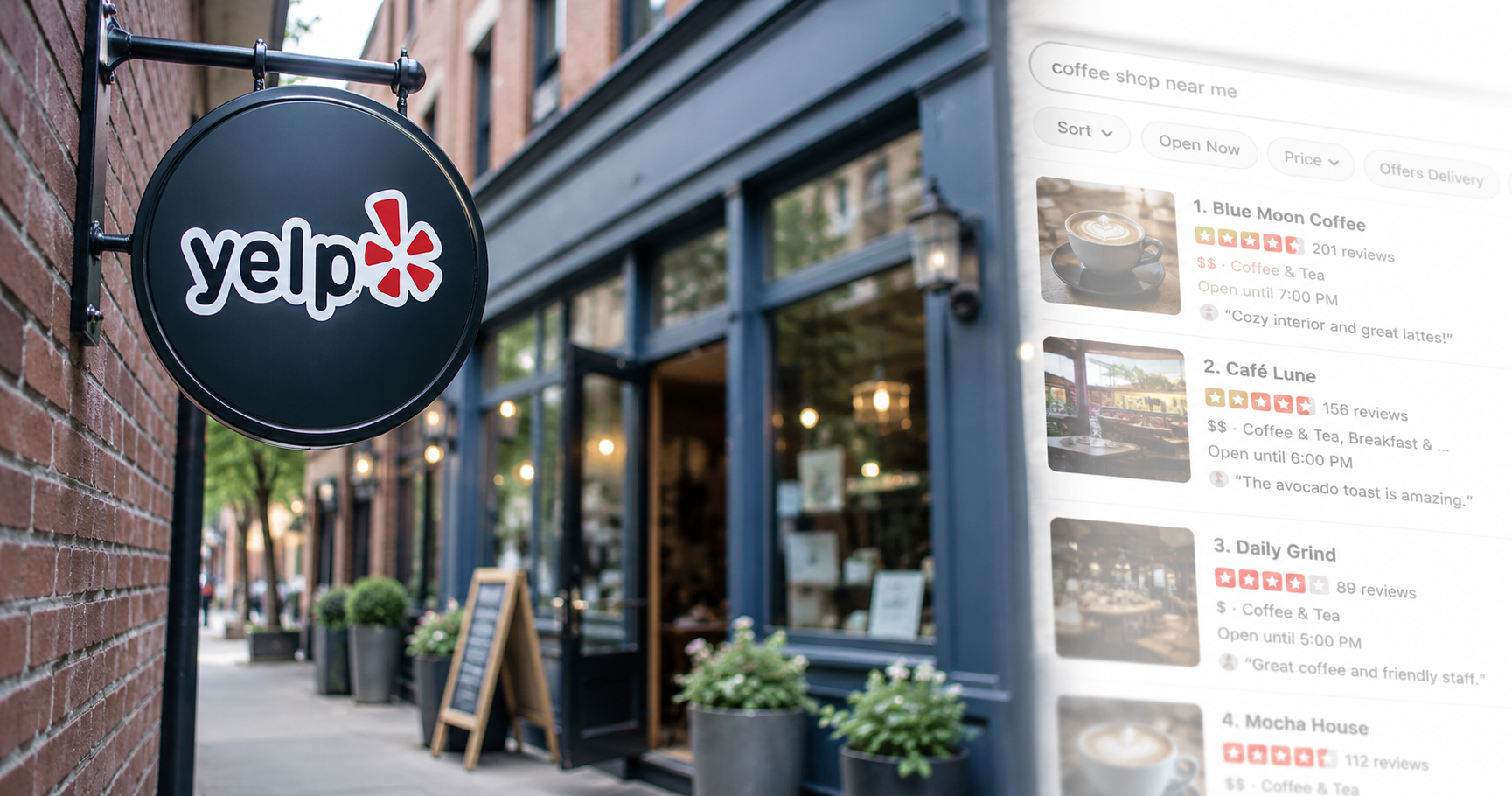
Yelp works because it's built for local search. When someone searches "best massage therapist near me" or "Italian restaurant downtown," Yelp shows up. Often before your website. That listing becomes your front door before anyone walks through the actual one.
What actually matters: how Yelp affects your local search rankings, what customers see when they land on your page, and how to set it up so it works for you instead of against you.
How Yelp Impacts Your Local SEO Rankings
Local SEO comes down to 3 things: relevance, distance, and prominence. Yelp feeds directly into prominence.
Prominence is how well-known and trusted your business looks online. Google looks at review signals everywhere—including Yelp. Your review count, star rating, how recent they are, whether you respond. A business with 150 Yelp reviews at 4.7 stars will rank higher than a competitor with 20 reviews, even if their Google Business Profile is identical.
Why it matters: Google doesn't just read your Google reviews. It pulls trust signals from across the web. Yelp is one of the highest-authority review platforms out there. A strong Yelp presence tells Google you're credible, active, and worth showing to local searchers.
Yelp listings also pop up directly in Google search results. Search "Thai food Austin" and you'll see a mix of Google Business Profiles and Yelp pages. If your Yelp profile is solid and loaded with recent reviews, you just doubled your chances of being found.
What Google Actually Reads from Your Yelp Profile
Google's crawlers read your Yelp page like any other website. They see your business name, category, location, hours, photos, reviews. They also watch how fast new reviews come in and track engagement—how many people click from Yelp to your site, call you, or ask for directions.
The algorithm cares about consistency too. If your business name, address, and phone number don't match on Google, Yelp, Facebook, and your website, Google gets confused. That confusion tanks your local rankings. Yelp is where those mismatches usually surface first.
Why Customers Still Trust Yelp Reviews
People believe Yelp because it feels real. Yelp's review filter is tough—sometimes annoyingly so—but that strictness builds trust. Customers know fake reviews get killed off. When they see 80+ detailed reviews, they believe what they're reading.
Compare that to Google reviews, which are easier to fake. Or Facebook reviews, which feel like you're asking a friend for a favor. Yelp sits in the middle: public enough to feel authentic, detailed enough to actually be useful.
Here's what happens in real life: someone searches for your business or what you offer. They find your Yelp page. They spend a minute reading 5-10 reviews. They decide whether to call you or move on. All before they ever see your website.
Your Yelp profile is doing your marketing whether you touch it or not. The question is whether it's helping or hurting.
What Customers Actually Look for on Yelp
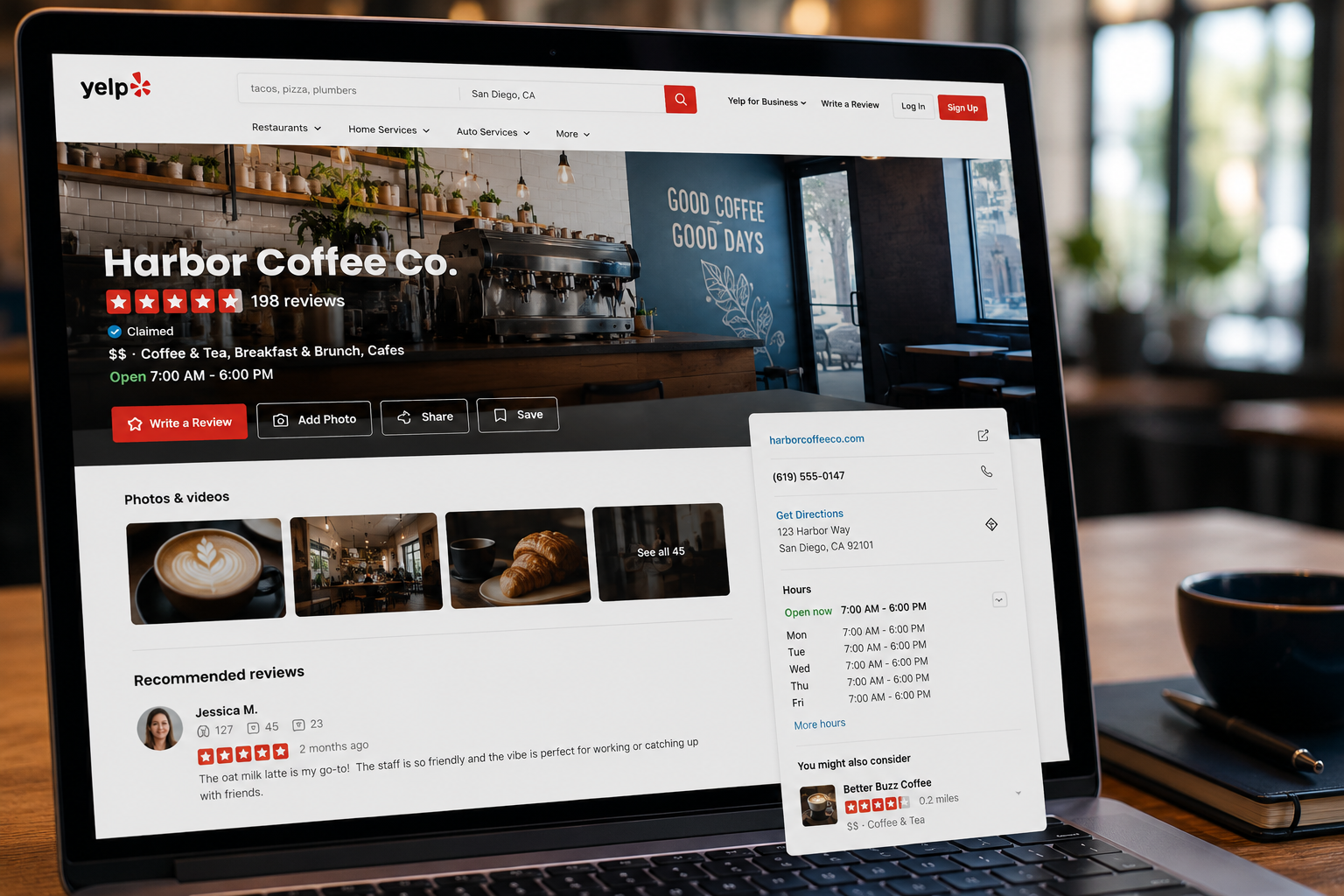
They glance at your star rating first. Anything below 4.0 and they're already hesitant. Then they dig into recent reviews—especially the 3 and 4-star ones, which feel more honest than a string of perfect 5s.
They look at photos. Not just your polished business shots, but customer photos. Real pictures of your food, your space, your work. A page with 100 reviews and zero photos feels incomplete.
They check your hours, location, and whether you bother responding to reviews. A business owner who replies thoughtfully to complaints? That tells them you care. One that ignores bad reviews? Tells them you don't.
How to Set Up Your Yelp Business Profile Correctly
Most small business owners claim their Yelp page and then forget about it. Don't do that.
Start by claiming your free business account if you haven't. Go to biz.yelp.com, find your business, and verify you're the owner. Yelp will confirm via phone call or postcard.
Once you're in, fill out everything. Business name, category, address, phone, website, hours. Upload at least 10 solid photos: outside, inside, what you actually do, your products, your team. Write a business description that's clear and specific. Skip the marketing fluff—just explain what you do and who you help.
Categories actually matter. Yelp lets you pick a main category plus several others. Choose accurately. If you're a wellness studio doing massage, acupuncture, and yoga, list all three. More categories mean more ways people find you.
What to Write in Your Yelp Business Description
Your description isn't a pitch. It's a straightforward explanation of what you offer and why someone should call you instead of your competitor.
For a restaurant: "Family-owned Italian spot serving fresh pasta, wood-fired pizza, and seasonal specials. We source locally and have gluten-free and vegan options. Open lunch and dinner, Tuesday through Sunday."
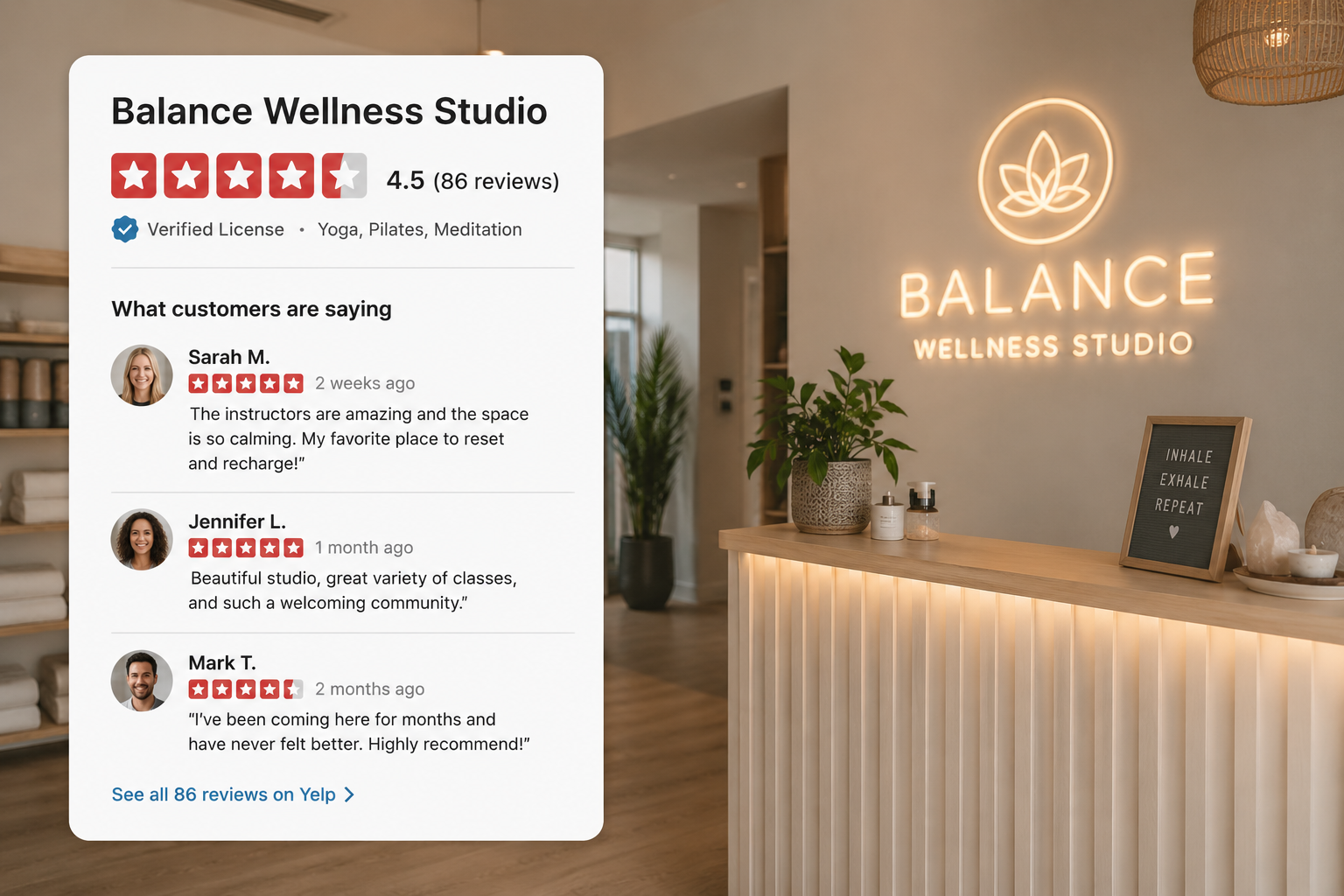
For a wellness studio: "Massage therapy studio specializing in deep tissue, sports massage, and prenatal care. Licensed therapists with 10+ years of experience. Same-day appointments available."
See what those do? They answer the questions customers are already asking. What kind of food? What are you actually good at? When are you open? Do you handle dietary needs or special requests?
How to Get More Yelp Reviews Without Sounding Desperate
Yelp cracks down hard on review solicitation. No incentives, no pressure, no handpicking who you ask. It's annoying for businesses trying to build momentum, but it protects credibility.
So here's the real approach: make it easy and natural for happy customers to leave reviews.
After a great experience, just say: "If you enjoyed your time here, we'd love if you shared that on Yelp. It really helps us." That's it. No pressure, no five-star demand, no pop-up link in their face. Just genuine and low-key.
You can also slip it on receipts, email signatures, or follow-up messages: "We're on Yelp—leave us a review if you get a chance." Keep it casual. The best reviews come from customers who want to share, not ones who feel cornered.
What to Do When You Get a Bad Yelp Review
Respond quickly. Respond calmly. Respond publicly.
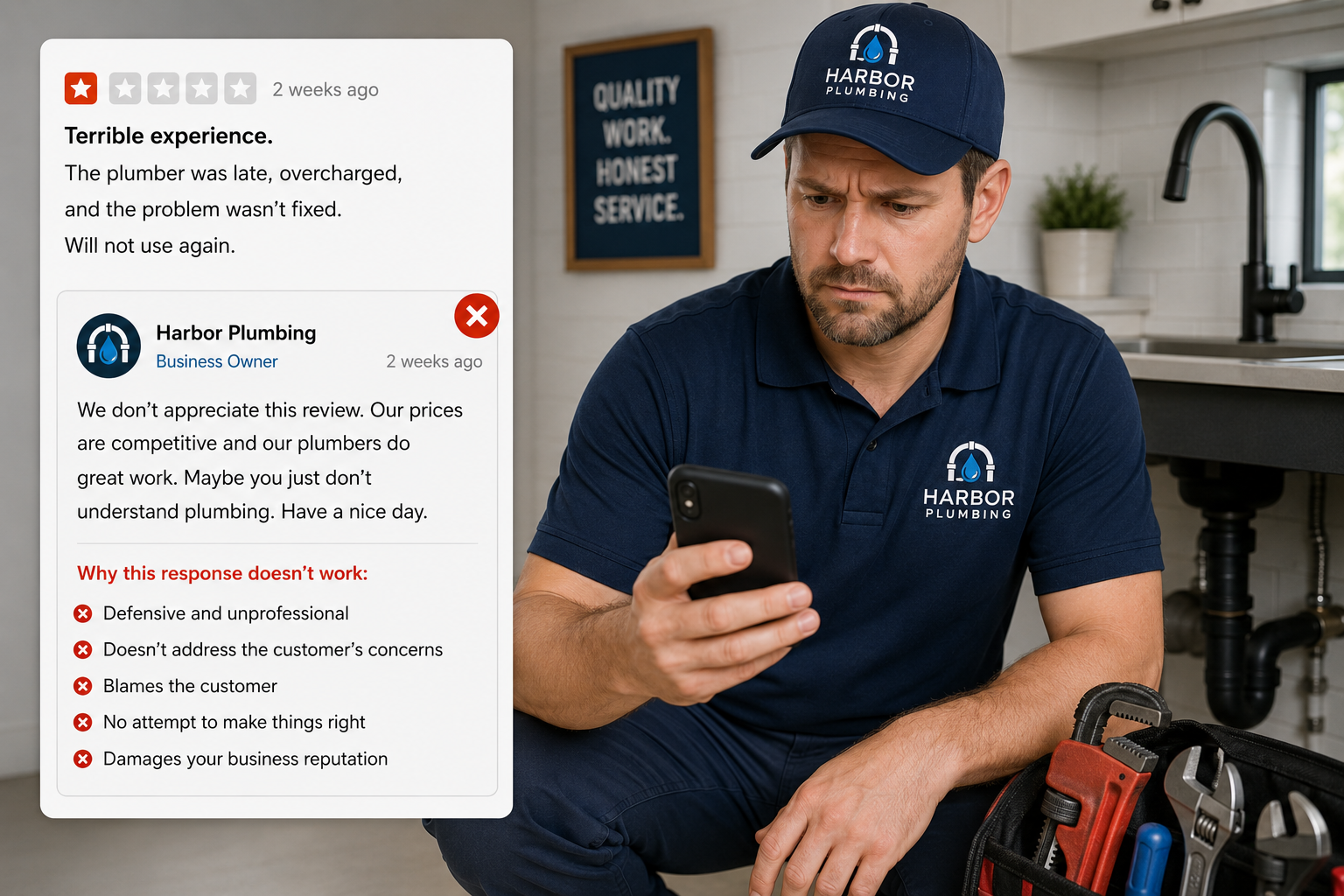
Bad reviews are actually your chance to show future customers how you handle problems. If someone leaves 2 stars saying their food was cold and service was slow, your response is your next marketing move.
Try this: "We're sorry your experience didn't match what we aim for. Cold food and slow service aren't acceptable, and we'd genuinely like to make it right. Please reach out to us at [phone/email] so we can fix this."
Don't argue. Don't get defensive. Don't explain why they're wrong. Even if the review feels unfair, your public response is watched by people considering whether to trust you. Act hurt and dismissive? They'll notice.
Should You Pay for Yelp Ads?
Yelp sells ads that put your business at the top of search results and on competitor pages. Sometimes it works. Sometimes it's money down the drain.
Yelp Ads make sense if: you're in a crowded category like restaurants, salons, plumbers, or contractors. When 20 businesses in town do what you do, paying to be first gives you an edge.
Yelp Ads are probably a waste if: you're in a smaller niche, you don't have many reviews yet, or people clicking from Yelp aren't actually becoming customers.
Before spending anything, check your free Yelp analytics. Log into biz.yelp.com and see how many people viewed your page, visited your website, called, or asked for directions. If those numbers look good, ads might boost them. If they're weak, fix your profile first.
Better Bet: Make Your Free Profile Unbeatable
Instead of ads, invest in making your free profile so good it doesn't need them.
Hire a photographer for an hour to shoot your space, products, and team. Upload those to Yelp. Good photos increase engagement by 30-40%.
Actually ask your best customers to review. Real ones, not fake. A steady stream of genuine reviews builds momentum and signals to Yelp's system that you're active and real.
Update your info seasonally. New service? Different hours? Menu changes? Update Yelp the same day you change it elsewhere. Outdated info kills trust faster than almost anything else.
How Yelp Fits Into Your Bigger Local SEO Picture
Yelp isn't the whole story. You also need a solid Google Business Profile, a website that actually works, consistent local listings, and some level of active social media.
Think of it this way: Yelp is where customers verify you're real and trustworthy. Google is where they find you first. Your website is where they learn details and decide to buy. Social media keeps them coming back.
Everything has a job. Yelp's job is credibility and discovery. When someone searches your name, they'll land on your Google profile and your Yelp page. If both look professional, current, and well-reviewed, they keep going. If one looks abandoned, they hesitate.
For local businesses, consistency across platforms is everything. Wrong hours on Yelp, dead phone number on Google, website hasn't changed since 2022? Customers assume you don't have your act together. They'll call someone who does.
Tools That Make Managing Yelp Easier (and Everything Else Too)
If you're logging into Yelp, Google, Facebook, and your website separately to update stuff, you're making it harder than it needs to be.
That's where Dreamer Consulting comes in. Whether you want to handle it yourself and just need a solid system and some guidance, or you'd rather hand it off completely, we can work with you either way. Update hours once instead of five times. Respond to reviews from one dashboard. No more wondering if you answered that Yelp message or if your listings are out of sync somewhere.
If you're already stretched thin running your business, having someone in your corner, even part-time, saves real time and catches the inconsistencies that quietly hurt your rankings.

Common Yelp Mistakes Small Businesses Make
Mistake 1: Claim it and forget it. You claimed it 3 years ago, uploaded one photo, never looked back. Now your hours are wrong, your description is generic, and you've missed customer messages.
Mistake 2: Only respond to good reviews. Replying to 5-star reviews is easy. Replying to 2-star ones is awkward. But potential customers read those 2-star responses. Ignoring negative feedback makes you look either defensive or careless.
Mistake 3: Ask for reviews the wrong way. Send a Yelp link in a text saying "leave us a 5-star review" and you've violated Yelp's rules. They'll filter those reviews or flag your account. Ask naturally, casually, no pressure.
Mistake 4: No photos. Yelp is visual. No photos on your page? Customers think you don't care. Upload actual photos of your work, space, products. Refresh them seasonally.
Mistake 5: Let inconsistencies pile up. Your Yelp name doesn't match your Google listing. Wrong phone number. Different address format. Local SEO dies from a thousand paper cuts. These details matter more than most people think.
Why Some Businesses Hate Yelp (And Why That's Costing Them)
Plenty of small business owners despise Yelp. Bad experiences with review filtering, pushy sales calls, or negative reviews they couldn't control.
I get it. Yelp's review filter is frustrating. Sometimes real reviews disappear because the algorithm thinks they're fake. Sometimes a competitor leaves a nasty review and there's nothing you can do.
But avoiding Yelp doesn't make those problems vanish. Your Yelp page exists regardless. Customers are finding it, reading reviews, and making decisions based on what's there. If you're not managing it, responding, or correcting things, you're letting your reputation run on autopilot.
Here's the harder truth: an unclaimed page with stale information and zero responses makes you look unprofessional. A claimed, optimized, actively managed one gives you control. One is clearly better than the other.
Final Take: Yelp Is Actually Worth It
Yelp isn't everything for local SEO. But it's one of the few platforms that directly moves the needle on visibility, credibility, and customer decisions.
If you're a small business competing locally—another restaurant in your city, a salon down the street, a wellness studio in your area—Yelp is one of the easiest wins sitting right in front of you. Claim it. Fill it out completely. Upload good photos. Respond to reviews. Done.
Do that consistently and Yelp becomes a 24/7 marketing machine. Ignore it and you're handing business to competitors who showed up.
You don't have to love Yelp. You just have to use it.